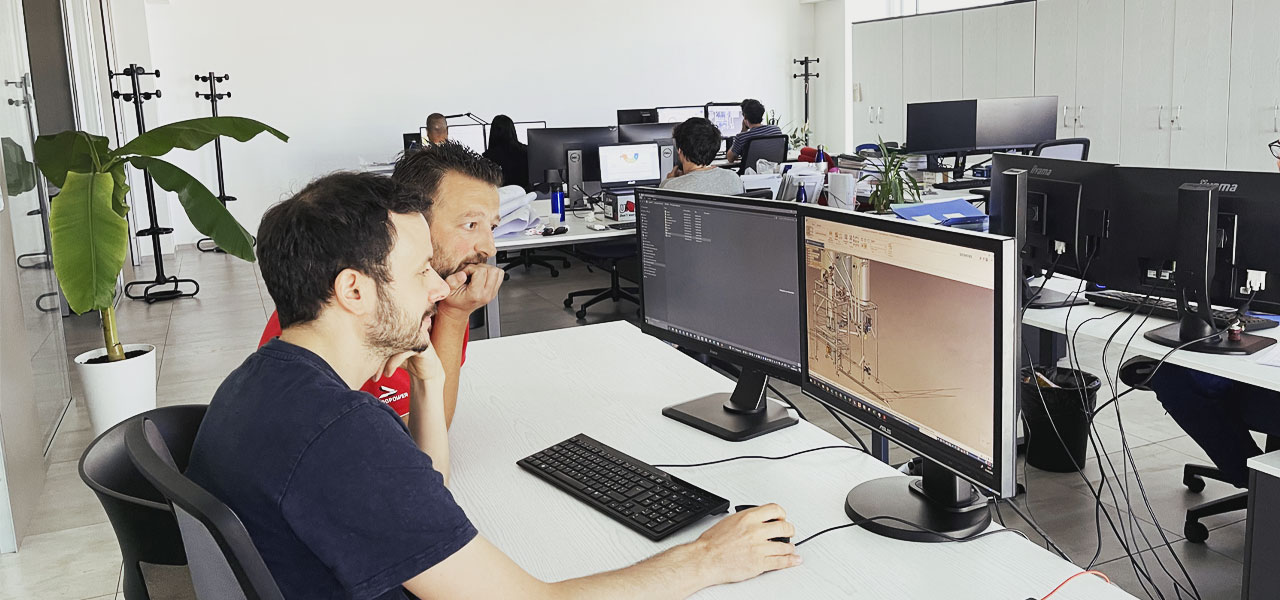
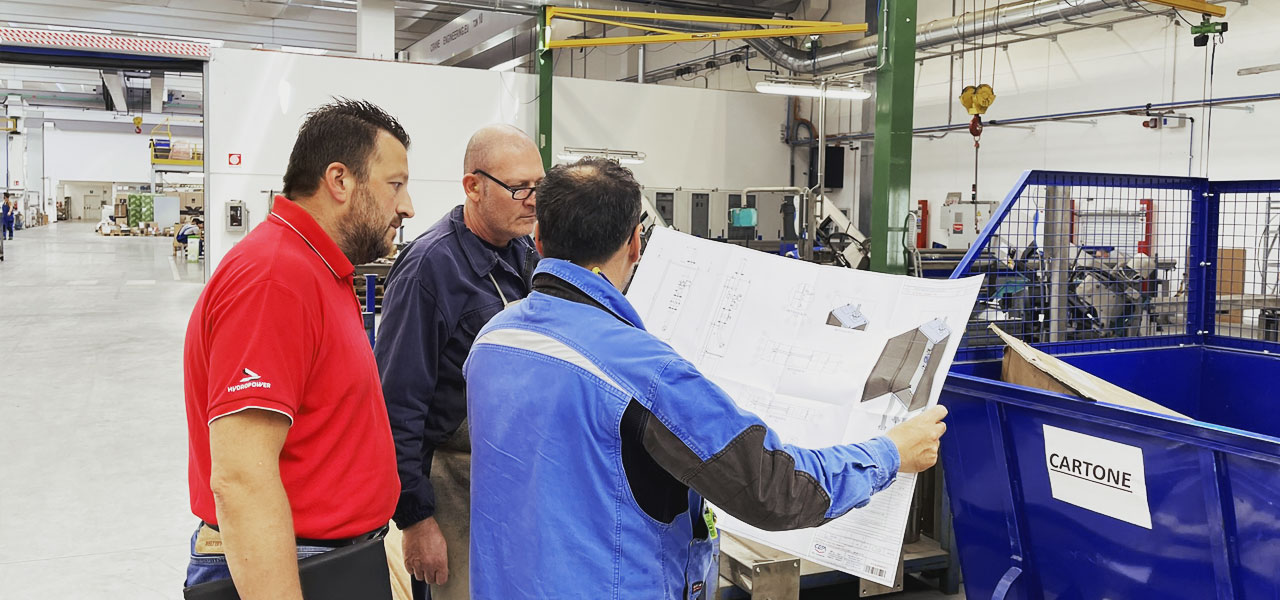
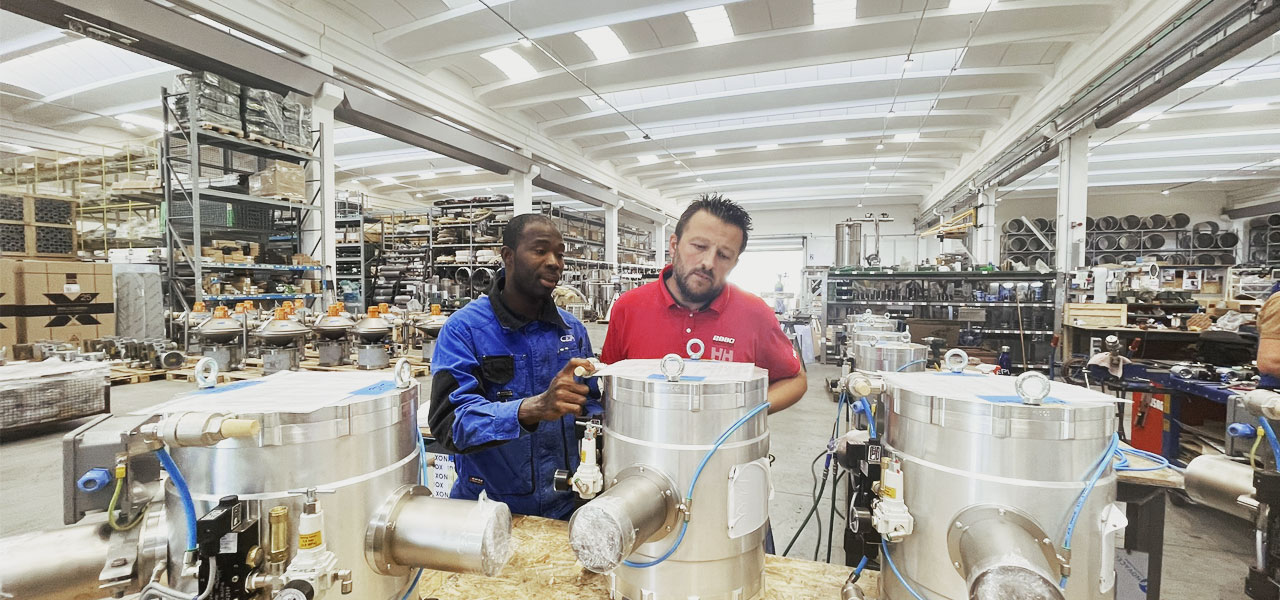
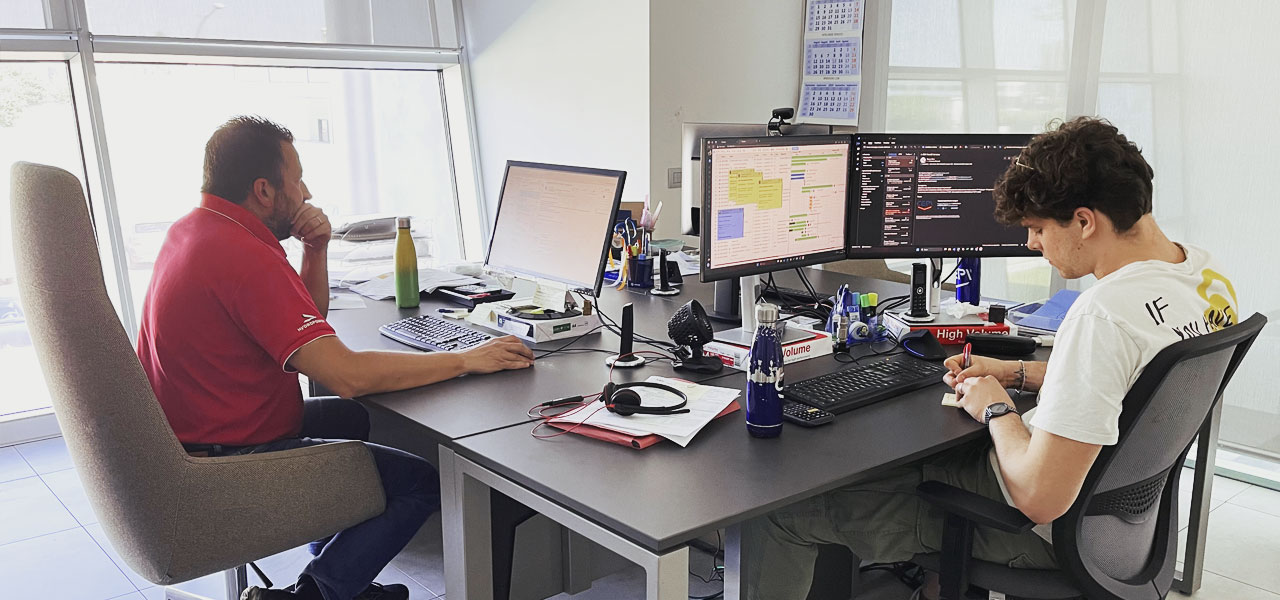
In fact, we can boast of a large roster of under 30s: how do you manage the young people in your team? Do you want to tell us something about your thesis project on steel and circularity?
The young people in CEPI are double the average of Italian companies: this says a lot about our company, which pays so much attention to quality education and training.
I manage young people, but also all my colleagues and colleagues, with a very direct relationship: I like to worry about them and I avoid formalisms. The “you” is a must, even with the last hire, because I want people to feel at ease and, above all, I want them to have respect not so much for the role I have, but for the person I am.
We also chose to entrust the thesis project on the green procurement of steel to a young graduate student to have a positive impact on the circularity of the CEPI plant. It’s a project that has just started, both the engineer and I are following it. Baschetti, my production assistant, and Monia Vittori, Head of Purchase Dept.
Once again, CEPI’s intent is clear: enhancing and investing in collaboration with schools means believing in the future.
One clear thing is that today the kids who leave school don’t have the same dexterity that we once had: this is why we tend to offer them experience in production first (especially during internship periods), to breathe the air of workshop, so that they can better under-stand the difficulties that their colleagues face in their daily lives. This obviously does not preclude their moving to an office, on the contrary, it represents a great plus for them.
Can you tell us about your previous experience? How did you arrive in CEPI?
I have a degree in Mechanical Engineering. I carried out a thesis project in the company: it involved a large pneumatic system for the production of biscuits. I took care of both the de-sign of the system, understood as general sizing, and the design of the carpentry parts through also finite element calculation software.
Once I finished my thesis, I worked for a while at the same company as a sales technician, then I changed company. I was Technical Manager for about a year: I followed everything, from design onwards. I started from the preliminary project, up to the construction drawing to send to the workshop. It was a small company, I also took care of purchasing materials; I went directly to the workshop to give directions; I had a continuous discussion with the workshop manager, and finally I also went to the construction site to follow some assembly work.
After that, I returned to the previous company, this time as Production Manager and stayed there for 2 years.
And finally, July 2007 arrives… I landed in CEPI thanks to my friendship with Davide Saputo and entered the Purchasing Office, as Mechanical Purchasing Manager: being a designer, I wanted to get involved and experiment with new things. After a couple of years, I became Production Director. Back then it was a very different reality, there were around 50 of us, today we are 162!
CEPI has just obtained UNI 125. What does it mean for you to be a member of the gender equality committee?
Obtaining UNI 125, the gender equality certification, is a source of pride for me and for this I must say thanks to the committee, in particular to Stefania. It is a project that I fully agree with and I am happy to be part of it.
I have to be honest, when I was asked to join the committee for gender equality I didn’t fully realize the type of commitment and I mistakenly believed it to be one more activity to carry out in addition to the many I have to follow.
In fact, it turned out to be a reality I didn’t know about. Day after day I realize that so little is known about gender equality and there is so much ignorance, in the sense that we don’t talk about it enough and consequently we don’t know the topic in its thousand facets. I had confirmation of this when we met the representatives of the Women’s Center of Forlì. When Giulia Civelli, coordinator of the center, and Dr. Succi, psychologist, spoke, I perceived a strange silence inside that room that made me think.
Before joining the committee, as a man, I had never asked myself the problem of gender violence, simply because I don’t even do or think about certain things, and therefore I didn’t feel that they belonged to me. However, the problem certainly exists and must be solved. Thanks to CEPI I understood that there is a real need to talk about it and provide information, because violence is present in our daily lives, even in the smallest moments, in moments of everyday life, in the family, for example.