Bulk-handling: not just silos, but turn-key installations that are durable and circular
We say this a lot, but bulk-handling isn’t just about silos. As important as they are, storage operations are only one part of systems we build. Our goal is to provide turn-key, highly customized solutions that manage the production line from storage to dosing. Turn-key is one crucial characteristic of our installations, and the other is organic: storage, dosing, conveying and their automation must be regarded in their totality, and in the way they interact with each other. This is crucial to achieve effective customization, which in turn is what makes installations very durable.
We take a long-term view when we design a bulk-handling system, to create the most flexible solution for each food manufacturer, one which does not preclude any new path they may take in the future. The design is based on a close analysis of the user’s process, based on information that goes well beyond the purely technical. Our method involves all departments from warehouse, to production, technical, purchasing and marketing, to include projection of future productions. This is what makes our installations very easy to adapt to future developments.
One of our strengths is the ability to bring new life to installations that would otherwise be decommissioned. This activity, known as revamping, makes it possible to extend the useful life of the plants indefinitely: systems that we built 30 years ago are still functioning efficiently.
The choice of basing our working model around being turn-key has been strategic. It makes users independent and meets their specific needs, and very importantly, it ensures that their process is efficient and sustainable, providing them with a durable installation that fits with the circular economy model.
CEPI’s product is circular: what it means and why it is important
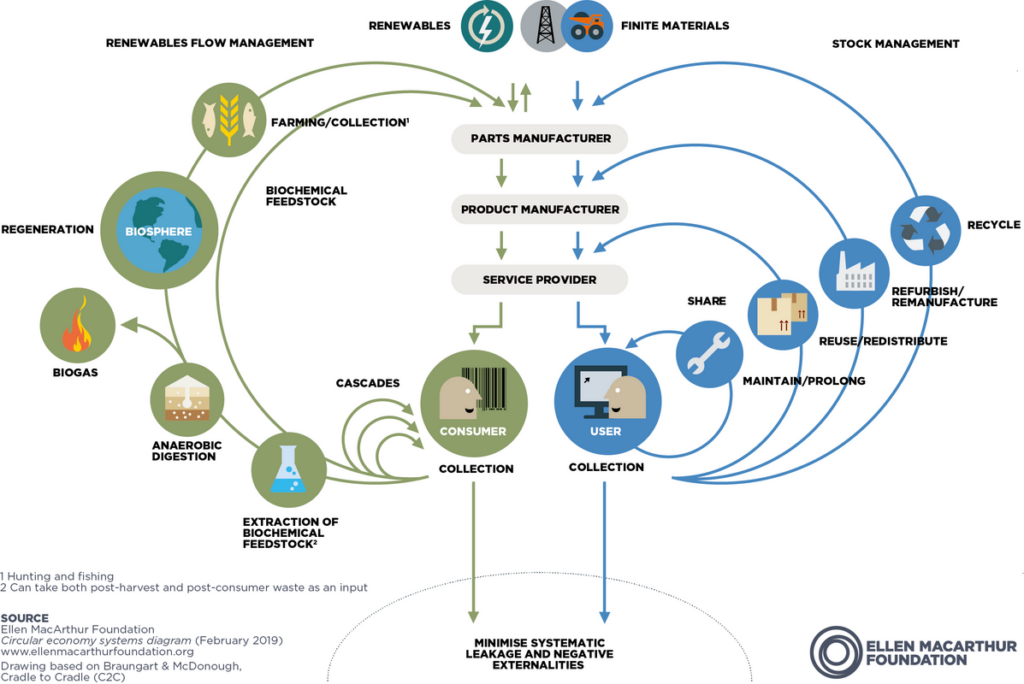
To gather more detailed information about the circularity of our product, we have commissioned a study from an agency that applies the method identified by the Ellen Mac Arthur Foundation, one of the most authoritative international organizations in the field of the circular economy.
The circular economy model is rapidly establishing itself both in international policies and in consumption models, as an essential element of the transition towards sustainable development. It aims to enhance the recycling and reuse of raw materials and products, to reduce the consumption of primary resources. The Ellen Mac Arthur Foundation has developed an indicator that aims to measure the level of circularity of a product, evaluating information about the origin of materials, information about the characteristics of the product and its use, and information about the end of life of the product.
CEPI has been the first company in Italy to commission the evaluation of a bulk-handling system (as opposed to a single application). Our circularity indicator for the average system right now is 0,7 on a scale between 0 and 1, which is considered a very good result. The materials are rated this way: suitable for reuse 83%, suitable for recycling 15%, disposal 2% and recycling efficiency 84%. This highlights a high quantity of reusable materials and materials sent for recycling.
All in all we are quite satisfied, especially as the final indicator was penalized by sector wide factors, in particular this past year’s materials crisis, which has made it much harder to procure recycled steel. We expect that once we return to our usual supply chain the indicator will automatically go higher, and we have made its increase one of our strategic goals.
What makes us particularly proud is that the durability of our installations is 30 years on average, which we attribute both to our high recycling efficiency and our design method. It makes it clear how strategic a turn-key approach that aims for flexibility is, and how much efficiency, durability and sustainability overlap.